Pressure Builds, Architecture Shifts: How the Regulatory Squeeze Is Rebuilding Crypto's Hidden Layer

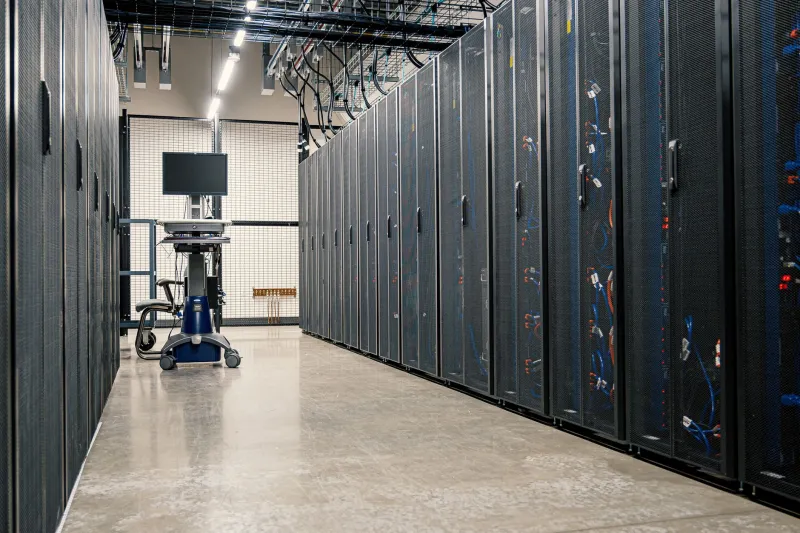
Photo: Dddeco at Japanese Wikipedia, CC BY-SA 3.0, via Wikimedia Commons
There's a pattern that plays out every time regulators think they've cornered a market. They tighten the screws on the visible infrastructure — the exchanges, the custodians, the staking desks — and declare a win. What they don't see is what's happening one layer down. The plumbing gets redesigned. New pipes get laid. And by the time enforcement catches up, the water's already flowing somewhere else entirely.
That's exactly what's happening right now in the US crypto underground, and the rebuild is more sophisticated than anything that came before it.
What Got Squeezed First
Let's be honest about where the pressure started. The SEC and CFTC didn't go after the weird corners of the market first — they went after the big, easy targets. Centralized exchanges got hit with registration demands, staking-as-a-service platforms got tagged as unregistered securities offerings, and custodians found themselves drowning in Bank Secrecy Act obligations they were never built to handle.
For a lot of retail participants, that was the wake-up call. When a platform you've been using for three years suddenly demands a government ID, a selfie, and a source-of-funds declaration just to move your own money, you start asking different questions. You stop asking where do I trade and start asking how do I trade without a gatekeeper in the middle.
That shift in mindset is exactly what's been driving the underground architecture rebuild.
Covenant-Based Bitcoin: The Long Game Nobody Talked About
One of the more interesting developments happening below the radar is the renewed interest in Bitcoin covenant scripts — specifically, the way certain covenant proposals could allow for non-custodial, condition-based transactions that don't require a trusted third party at any point in the chain.
Covenants, for those who haven't gone deep on the technical side, are essentially programmable restrictions on how Bitcoin can be spent. Proposals like OP_VAULT and earlier covenant concepts allow users to build spending conditions directly into the UTXO structure — meaning you can design a transaction that only executes under specific circumstances, without routing it through any intermediary who could be compelled to block it.
The compliance implication is significant. If settlement conditions are baked into the Bitcoin script itself, there's no custodian to serve a court order to. There's no compliance officer to threaten. The enforcement surface essentially disappears.
Privacy-focused builders have been watching the covenant debate closely, and a subset of them are already prototyping peer-to-peer settlement layers that use covenant logic as the foundation. It's early, and Bitcoin's conservative development culture means nothing ships fast — but the direction of travel is unmistakable.
The DEX Layer Isn't What It Used to Be
Decentralized exchanges were supposed to be the answer to centralized compliance pressure, and in some ways they delivered. But the first generation of DEXs had a problem: they were decentralized in name more than in practice. Frontend interfaces were hosted on domains that could be taken down. Liquidity routers had identifiable operators. Token lists were curated by teams with public faces and legal exposure.
What's emerging now is a second generation that's taken those lessons seriously. Fully on-chain governance, immutable frontend deployments on distributed storage networks, and liquidity routing that happens entirely at the contract layer without any off-chain coordination points. The goal isn't just to make trading harder to block — it's to make it structurally impossible to block without shutting down the underlying blockchain itself.
For US-based privacy traders, this matters a lot. When a DEX frontend gets geo-blocked or a domain gets seized, it looks like a win for enforcement. But if the contracts are still live and the liquidity is still there, anyone with a local interface or a direct RPC connection can keep trading. The seizure is theater. The market keeps moving.
P2P Settlement Meshes: Going Even Further Off-Grid
Beyond the DEX layer, a quieter evolution is happening in peer-to-peer settlement infrastructure. Think of it less like an exchange and more like a dark web forum where trades are negotiated directly between parties, with settlement handled by atomic swap logic or multi-signature escrow that neither party can unilaterally control.
These systems aren't new in concept — Bisq has been operating on roughly this model for years. But the new generation is learning from Bisq's limitations. Liquidity fragmentation, slow settlement times, and UX that required serious technical knowledge kept P2P systems on the fringe. The newer builds are attacking those problems directly, with better liquidity aggregation across counterparties, faster settlement through payment channel integration, and interfaces that don't require users to understand the underlying mechanics.
The enforcement challenge these systems pose is genuinely novel. There's no company to sue. There's no server to seize. There's no compliance officer to threaten with personal liability. The entire settlement infrastructure exists as a set of rules encoded in open-source software running on participants' own machines. Regulators who've spent years building playbooks around corporate accountability are finding those playbooks don't translate.
The Cat-and-Mouse Dynamic Is Changing Shape
Here's what's different about the current cycle compared to earlier rounds of regulatory pressure: the builders are anticipating enforcement moves before they happen, not reacting after the fact.
In the early exchange era, compliance pressure would hit, a platform would scramble to adapt or shut down, and users would scatter. The regulatory move came first, the technical response came second. What's happening now looks more like parallel development — privacy infrastructure is being built with enforcement resistance as a first-order design requirement, not an afterthought.
That's partly a cultural shift among developers who've watched enough enforcement actions to understand the playbook. But it's also a technical maturation. The primitives that make non-custodial, censorship-resistant settlement possible — zero-knowledge proofs, atomic swaps, covenant scripts, distributed storage — are all more robust and more accessible than they were five years ago.
Regulators are getting smarter too, of course. The Financial Crimes Enforcement Network has been quietly expanding its understanding of DeFi mechanics, and there are serious proposals on the table that would treat certain smart contract deployments as money transmission operations. But understanding the technology and being able to effectively regulate it are two very different problems, and the gap between them is where the underground continues to operate.
What This Means for Privacy-Focused US Traders
If you're operating in the US and trying to maintain meaningful financial privacy, the takeaway from all of this is that the infrastructure is getting better, but so is the scrutiny. The window between a new privacy tool going live and regulators developing a response to it is shrinking.
The traders who are navigating this well aren't just chasing the latest privacy tech — they're thinking structurally about where enforcement pressure is likely to land next and positioning their infrastructure accordingly. They're watching the covenant debate. They're paying attention to which DEX architectures have genuine censorship resistance versus which ones are just marketing the term. They're treating P2P settlement as a serious option rather than a fringe workaround.
The compliance trap door that regulators keep trying to close keeps getting rebuilt somewhere else. That's not an accident. It's the architecture talking.