Toll Roads in the Ether: The Real Price of Moving Wrapped Assets Across Chains
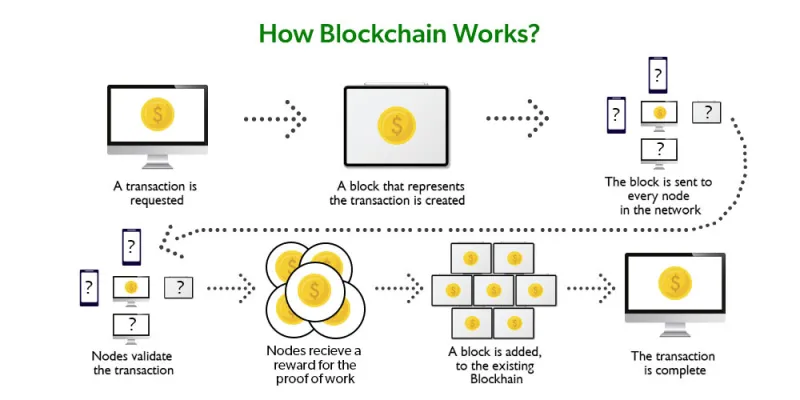
Photo: blockchain bridge network cryptocurrency digital chains glowing dark background, via image.coinbureau.com
There's a version of cross-chain trading that sounds almost too clean: spot a price gap between Ethereum and Avalanche, bridge your assets over, collect the difference, and walk away. Simple arbitrage. The kind of thing that sounds like it belongs in a finance textbook.
Reality disagrees.
Bridges — the infrastructure that wraps native tokens into synthetic equivalents and ferries them between blockchains — are some of the most financially and technically treacherous tools in the crypto ecosystem. Casual users treat them like moving walkways. Serious operators treat them like minefields with profit hidden between the pressure plates.
Understanding the difference between those two groups starts with understanding what a wrapped asset actually is, and what it quietly costs you.
What Wrapping Actually Does to Your Token
When you bridge ETH to a chain like Solana or BNB Chain, you're not actually sending ETH anywhere. The original token gets locked inside a smart contract on the source chain, and a new synthetic representation — often called wETH or a chain-specific variant — gets minted on the destination side. That wrapped token is only as good as the bridge contract holding the original.
This is the first hidden cost: counterparty risk disguised as a technical process. You're not holding ETH anymore. You're holding a claim on ETH, backed by code, sometimes by a multisig, sometimes by a centralized custodian wearing a decentralization costume. The price might look the same on a DEX, but the risk profile is fundamentally different.
Sophisticated traders who run cross-chain arb desks know this. They price it in. Retail doesn't.
The Fee Stack Nobody Talks About
Here's a breakdown of what you're actually paying when you use a major bridge:
Source chain gas fees. The lockup transaction on Ethereum, for instance, can cost anywhere from a few dollars on a quiet Sunday night to $40+ during periods of congestion. This is the visible layer.
Bridge protocol fees. Most bridges charge a percentage of the asset being transferred — typically 0.05% to 0.3%, sometimes higher for smaller chains. This gets buried in UI that emphasizes speed over cost transparency.
Destination chain gas. Minting the wrapped token on the other side isn't free either. If you're landing on a cheaper L2 or alt-L1, this might be negligible. If you're going somewhere with its own fee pressure, it adds up.
Slippage on the other end. This is where traders get quietly destroyed. The wrapped asset you receive may not have deep liquidity on the destination chain's DEXs. When you go to swap it into something useful, you're eating slippage that wasn't part of your original profit calculation.
Unwrapping costs. If you ever want to bring your assets back to native form, you pay again. The round trip is almost always more expensive than traders model going in.
Stack all of that against a 0.8% price discrepancy between chains — which is on the higher end of what arb bots are even fighting over — and you can see why most bridge-based arbitrage is a losing trade for anyone who isn't running automated infrastructure with sub-second execution.
How the Shadow Traders Actually Use Bridges
Here's the thing: the underground trading crowd isn't primarily using bridges for clean arbitrage. They're using the mechanics of bridges as an obfuscation layer and a liquidity access tool.
Wrapped assets create natural ambiguity in on-chain attribution. A token that exists on three chains simultaneously, each with different liquidity pools and pricing engines, becomes harder to track as a unified position. Privacy-conscious traders have been known to fragment large holdings across chains specifically because blockchain analytics firms have to reconcile wrapped asset movements across multiple networks — a significantly harder task than tracing a single-chain transaction.
There's also the liquidity arbitrage angle that doesn't require the asset price to differ between chains. Some bridges offer yield on locked assets — the ETH sitting in the bridge contract earns staking rewards or lending yield while the wrapped version circulates on another chain. Operators who understand this can construct positions where they're earning on both sides simultaneously, effectively double-dipping on capital that retail users think is just in transit.
The Security Layer: Where Real Money Disappears
No conversation about bridge risk is complete without acknowledging that bridges have become the single largest attack surface in crypto. The Ronin bridge hack in 2022 drained over $600 million. Wormhole lost $320 million. Nomad collapsed for nearly $200 million. These aren't edge cases — they represent a structural vulnerability in how cross-chain value transfer is currently architected.
Most bridges rely on a set of validators or a multisig arrangement to attest that a lockup happened on the source chain before minting on the destination. If those validators are compromised — through private key theft, social engineering, or protocol exploits — the entire locked pool is at risk.
What sophisticated operators do differently: they time their bridge exposure. Large positions don't sit in wrapped form any longer than necessary. The bridge is a transit mechanism, not a storage solution. The longer your assets spend in wrapped state, the longer you're exposed to a protocol-level catastrophe that has nothing to do with market movements.
Reading the Bridge Like a Spread
The traders who consistently extract value from cross-chain mechanics aren't thinking about bridges as infrastructure. They're thinking about them as spreads with embedded options — the fee stack is the cost of the spread, and the exploit risk is a short-volatility position they're implicitly writing every time they use the bridge.
Pricing that implicit risk correctly is what separates the professionals from the people who bridge $50,000 into a protocol the day before it gets drained.
The practical takeaway for anyone operating in these markets: audit your bridge before you use it. Check the validator set, the audit history, the total value locked relative to the security budget, and whether there's any insurance backstop. Sites like L2Beat and DeFiLlama's bridge tracker give you the raw data. The interpretation is on you.
Wrapped assets aren't inherently dangerous. But they carry costs — financial and technical — that the clean interfaces are specifically designed to make you forget about. In markets where every basis point matters, forgetting is expensive.
The toll road analogy holds. You can drive it. Just know what you're paying, and who built the road.