Ghost Volume: How Coordinated Whale Wallets Are Manufacturing Fake Momentum on New Token Launches

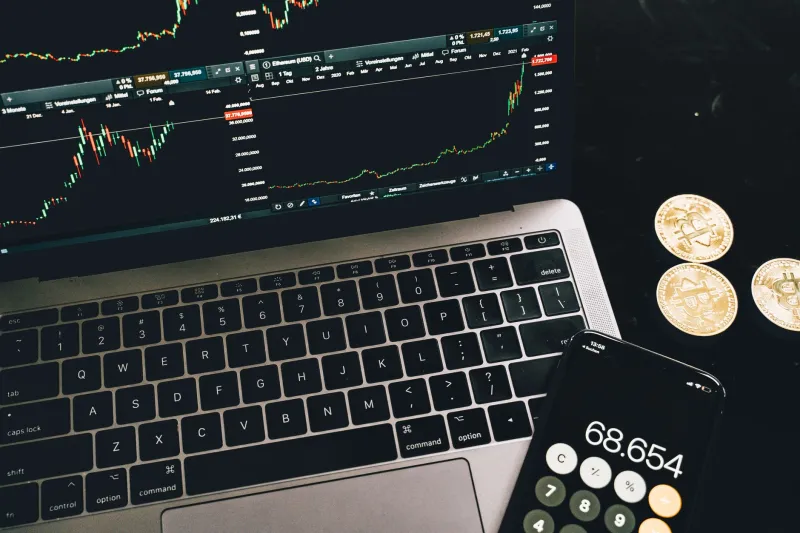
Photo: whale cryptocurrency manipulation dark trading screen charts, via us.whales.org
There's a moment in almost every suspicious token launch where everything looks perfect. Volume is climbing. Wallet counts are rising. The price action looks clean — not too vertical, not too flat. Organic, almost. That's not an accident. That's a performance.
Deep in the underground trading circles that Kingdom Onion covers, this kind of manufactured momentum has a name: ghost volume. And the people running it aren't amateurs slapping together a quick rug. They're patient, technically fluent operators who understand that the best pump doesn't look like a pump at all.
The Anatomy of a Coordinated Wallet Cluster
At the foundation of most ghost volume schemes is a web of wallets that appear unconnected but move in quiet synchronization. On the surface, you've got dozens — sometimes hundreds — of distinct addresses buying and selling a freshly launched token. Pull back and look at the funding trail, though, and a different picture emerges.
Most of these wallets were seeded from the same upstream source: a single wallet, or a small cluster of wallets, that distributed gas money and initial token allocations days or even weeks before the launch went public. That timing gap is intentional. It creates enough distance between the origin wallet and the active trading wallets that automated surveillance tools often miss the connection.
From there, the wallets trade with each other. Not randomly — strategically. Small buys, slightly larger sells, a pause, another buy from a different address. The pattern mimics what organic retail accumulation looks like on a DEX. The volume numbers climb. The liquidity depth appears real. Aggregators pick it up and display it without context.
Why DEX Infrastructure Makes This Easy
Permissionless token launches on decentralized exchanges are a feature, not a bug — but that same openness is what ghost volume operators exploit. There's no listing committee, no vetting process, no requirement that trading activity be independently verified. If wallets are moving tokens and ETH is changing hands, the protocol records it as legitimate volume.
Some of the more sophisticated schemes layer in timing tricks that specifically target how DEX aggregators and analytics platforms calculate their metrics. By front-loading activity during the first few hours of a launch — when data indexers are still building their baseline — operators can set a falsely elevated volume floor that makes everything that follows look like a natural continuation rather than a spike.
They also exploit liquidity pool mechanics. A whale who controls both sides of a pool can execute wash trades that generate fee revenue while simultaneously inflating volume metrics. The cost of doing this is the fee percentage itself — a small price to pay for the appearance of a thriving market.
Reading the Fingerprints
Here's where it gets practical. If you're operating in underground markets and looking at new token launches before committing capital, there are specific on-chain signatures that separate ghost volume from the real thing.
Wallet age and funding source. New wallets with no prior transaction history that suddenly appear fully funded right before a launch are a red flag. Use a block explorer to trace the funding wallet. If five, ten, or twenty "different" buyers all received their initial ETH from the same address within a 48-hour window, you're looking at a cluster, not organic interest.
Trade timing distribution. Genuine retail buying is messy. It happens at irregular intervals, in irregular sizes, from wallets with real transaction histories. Coordinated ghost volume tends to follow a rhythm — trades clustered in short bursts, often with suspiciously similar transaction sizes. Pull the raw transaction data and look at the timestamps. A clean, almost metronomic pattern is not a good sign.
Liquidity provider concentration. Check who actually provided the liquidity the token is trading against. If a single address or a tight cluster of addresses controls more than 60-70% of the pool, the operator can drain it at will. That's not a market. That's a trapdoor.
Holder distribution vs. volume ratio. High volume with a low unique holder count is one of the clearest signals in the game. If a token is supposedly doing $2 million in daily volume but only 80 wallets hold it, the math doesn't work unless those wallets are trading with themselves.
The Psychological Layer
Ghost volume isn't just a technical trick — it's a social engineering operation. The fabricated on-chain activity is designed to trigger specific psychological responses in retail traders: fear of missing out, social proof, the sense that smart money is already in.
Underground forums and private Telegram groups are often seeded simultaneously with the on-chain activity. Screenshots of the volume charts circulate. Influencer accounts — some paid, some just pattern-matching off the fake signals — amplify the momentum. By the time genuine retail money starts flowing in, the exit is already being prepared.
This is why raw chart data, even from reputable aggregators, can't be your only input. The chart shows you what happened. It doesn't tell you who made it happen or why.
What Sharp Traders Are Actually Doing
The traders who consistently avoid these setups aren't smarter in some abstract sense — they've just built better pre-entry checklists. Before touching any new token launch, they're running wallet cluster analysis, checking liquidity provider concentration, cross-referencing the on-chain timeline against the social media activity timeline, and looking for the gap between reported volume and actual unique buyer counts.
Some are using open-source tools like Nansen's free tier, Bubblemaps, or raw Etherscan queries to map wallet relationships manually. It takes twenty minutes. It's not glamorous. But it's the difference between being the exit liquidity and being the one who spotted the exit before it opened.
The underground has always rewarded people who do the unglamorous work before everyone else catches up. Ghost volume schemes depend on the assumption that most people won't look past the surface numbers. Prove that assumption wrong and you're already ahead.
The Takeaway
Fake trading volume isn't new. Wash trading has existed in traditional markets for decades. What's changed is the tooling available to both the people running these schemes and the people trying to detect them. On-chain data is public and permanent — every coordinated wallet cluster leaves a record, even if that record requires some digging to read.
The operators running ghost volume are counting on information asymmetry. They know most retail traders are looking at a price chart and a volume bar. They're not expecting someone to trace their funding wallets back three weeks or map the trading intervals against a timestamp spreadsheet.
That gap — between what's visible on the surface and what's readable in the data — is exactly the kind of edge that underground traders have always lived in. Use it.